What exactly is identity theft protection?
Identity theft protection is a combination of tools and services designed to help protect personal information, detect possible exposure or misuse, and support a response when suspicious activity appears.
A useful way to think about it is to protect first. Then monitor. Then respond. Protection reduces the chances of personal information being exposed. Monitoring looks for warning signs such as compromised credentials or unusual account activity, and response tools help users act if something suspicious is detected.
Identity theft protection is broader than credit monitoring because it can cover more than changes to a credit file. Some services also monitor exposed personal data or other signs of misuse.
No service can guarantee that identity theft will never happen.
For more detail on the different types of identity theft, warning signs, causes, and consequences, check our existing guide to what identity theft is.
- Identity theft protection combines security, monitoring, alerts, and recovery support.
- Identity monitoring can detect exposed personal data and signs of suspicious activity.
- Credit monitoring is one part of identity protection and focuses on changes to credit files.
- No identity theft protection can prevent every type of identity theft.
- Effective protection combines preventive security with monitoring and clear response guidance.
How does identity theft protection work?
Identity theft protection uses different tools to secure personal information, monitor for signs of exposure or misuse, and help users take action when suspicious activity is detected. The exact combination of features varies between services. The exact mix of protecting features depends on the service being used.
Some solutions focus mainly on monitoring. Many can combine cybersecurity tools, privacy features, alerts, and recovery support.
Protecting your personal information
Protection starts by reducing opportunities for sensitive information to be stolen or exposed. Different tools help in different ways:
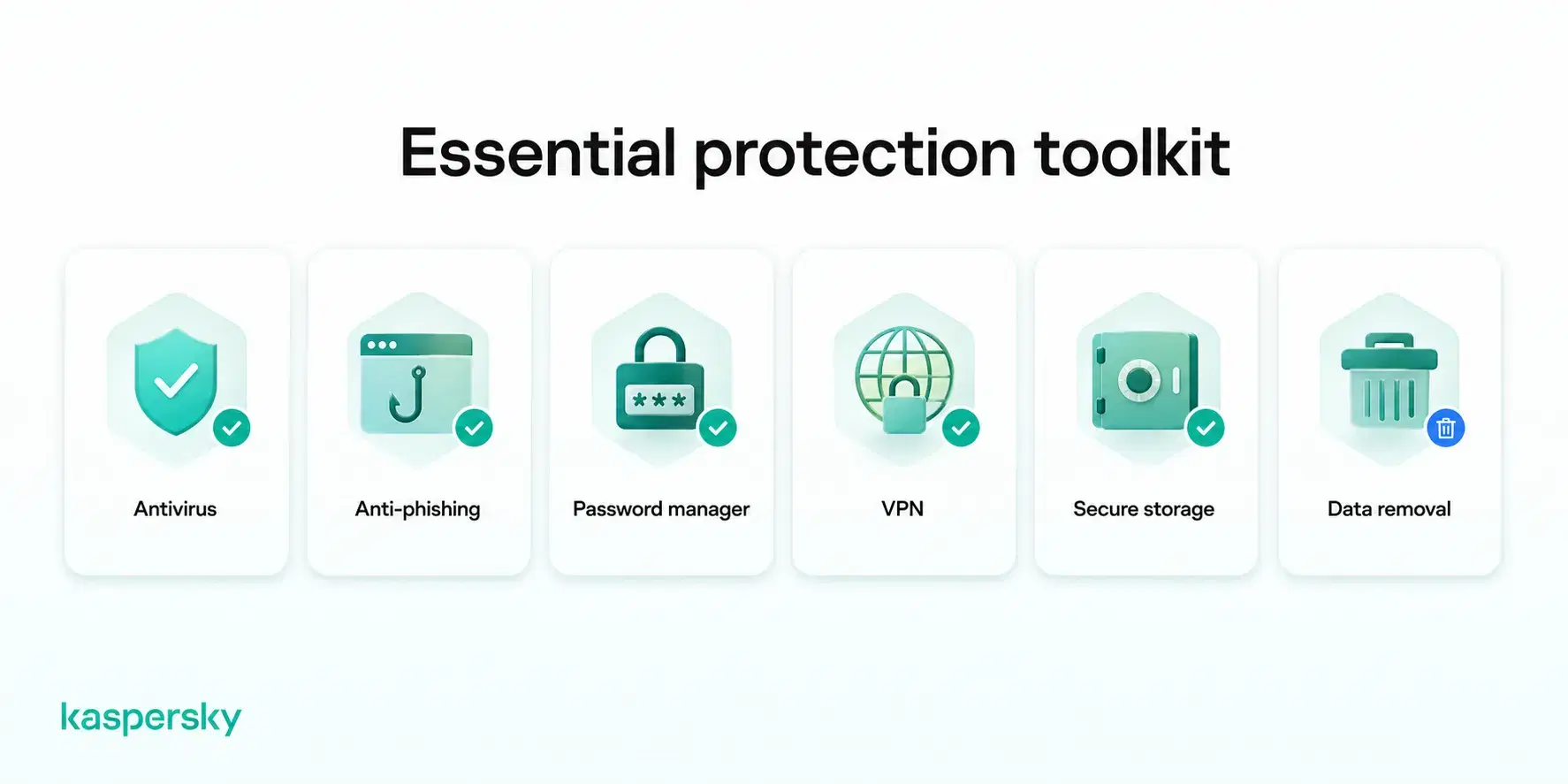
- Antivirus and anti-phishing protection can help block malware, malicious websites, and fraudulent messages designed to steal personal data.
- Password managers help users create and store strong passwords for important accounts.
- VPNs can help protect internet traffic (especially on unfamiliar or public networks).
- Secure document storage can help keep sensitive files such as financial records or identity documents better protected.
- Privacy and data-removal tools can reduce how much personal information is publicly available online.
These measures help protect many kinds of personal information that could be misused in the wrong hands.
Independently tested and awarded by the industry's leading labs.



Monitoring for exposed or misused information
Identity theft monitoring looks for signs that personal information may have been exposed or used suspiciously.
Depending on the service, this can include:
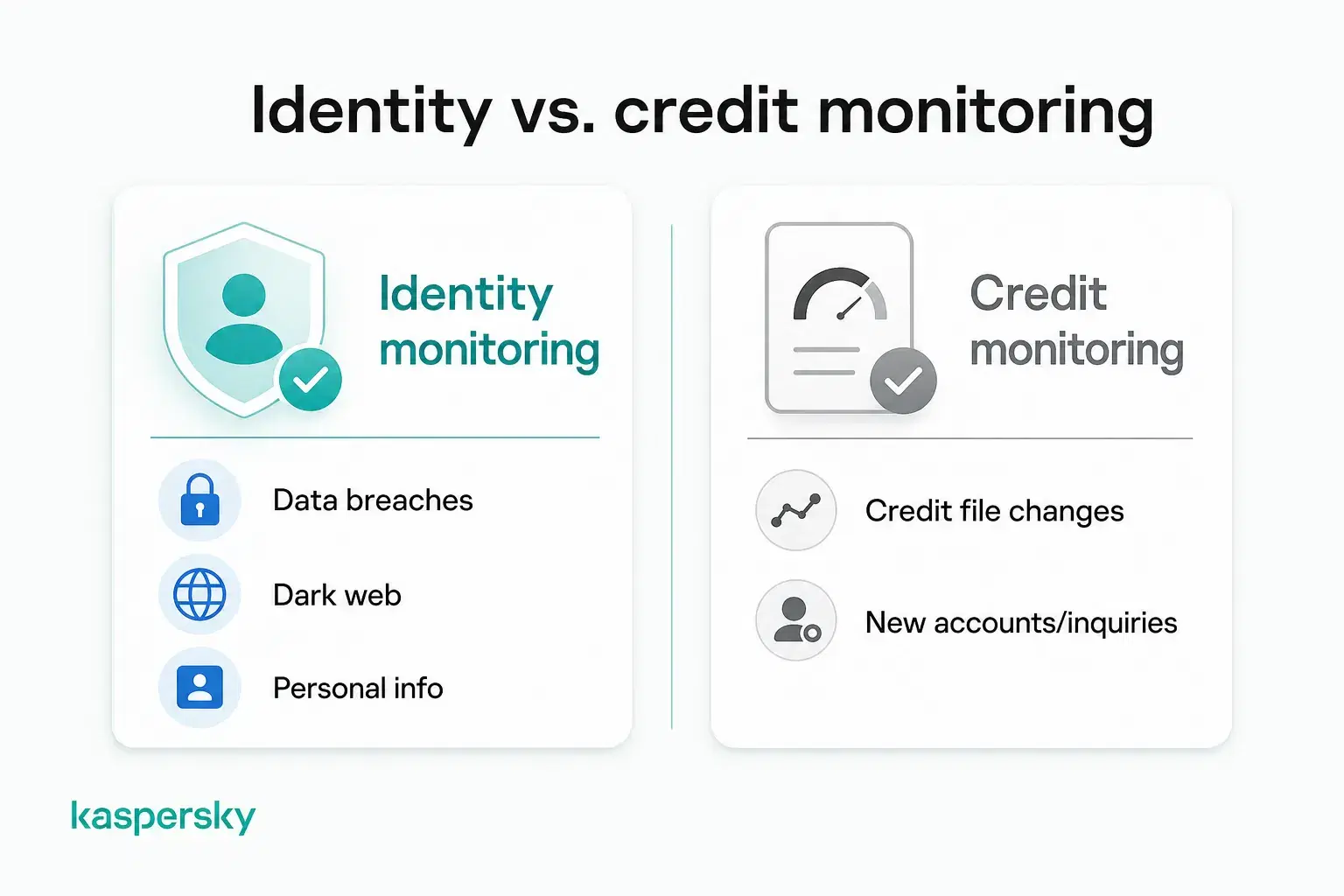
- Data breach monitoring for exposed login details or other account information.
- Dark web monitoring for personal data found in known breach or criminal-data sources.
- SSN or identity monitoring for signs that sensitive identity information may be appearing in suspicious contexts.
- Financial account monitoring for unusual activity.
- Credit monitoring for changes to a credit file. This includes new accounts or inquiries.
Credit monitoring is narrower than broader identity monitoring because it focuses mainly on credit-file activity. Monitoring all three major U.S. credit bureaus (Equifax, Experian, and TransUnion) can provide wider visibility than monitoring only one.
No monitoring service can see every possible use of personal information. The coverage varies between providers.
Responding when something is found
If a monitoring service detects suspicious activity, it will usually send an alert explaining what was found and what action may be needed.
That may include:
- Changing compromised passwords.
- Securing affected accounts.
- Reviewing suspicious financial transactions.
- Investigating unfamiliar credit activity.
- Contacting the relevant bank or credit bureau.
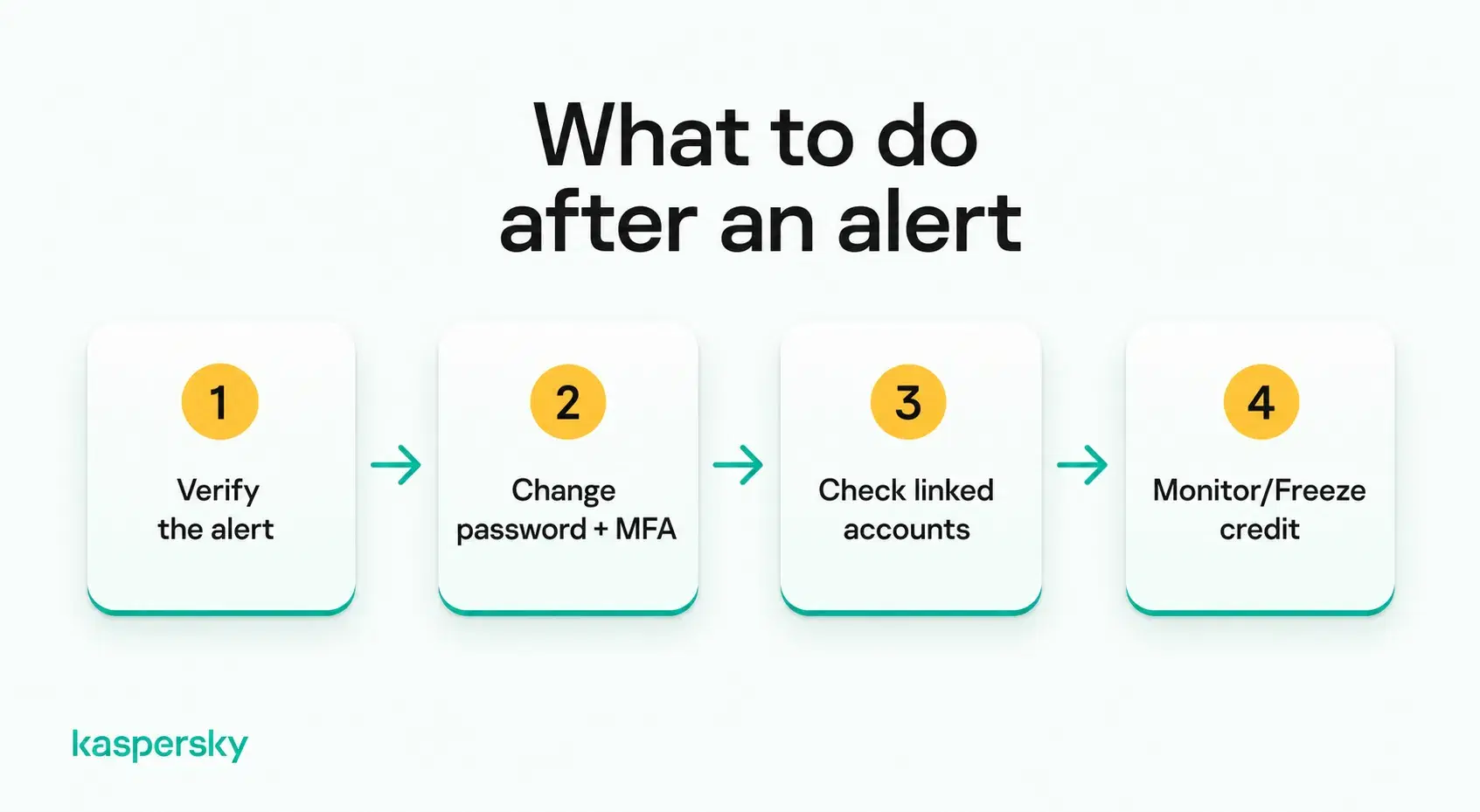
Some identity theft protection services also include identity restoration assistance. They can potentially help users resolve confirmed identity fraud and work through the recovery process.
For a full step-by-step guide to recovering after identity theft, explore our identity theft guide.
Can identity theft protection prevent identity theft?
No identity theft protection solution can guarantee complete prevention. Security tools can reduce opportunities for personal information to be stolen. Monitoring services often help detect exposure or misuse after it has already happened.
A dark web or data breach alert may mean that information is already circulating outside your control. The value of the alert is that it can give you an opportunity to secure your accounts or investigate suspicious activity before the situation develops further.
Identity theft protection works best as multiple complementary layers, combining preventive cybersecurity, monitoring, alerts, and recovery support rather than relying on a single feature.
Is identity theft protection worth it?
Identity theft protection can be worth it if you want broader monitoring, centralized alerts, and additional help responding to suspicious activity. Whether you need a paid service depends on the protection you already have and how much you are comfortable managing yourself.
Consumers can take several useful steps without paying for a dedicated service. This includes using credit freezes, fraud alerts, official credit reports, financial account alerts, strong account security, and multi-factor authentication.
A broader identity protection solution can complement these measures by bringing together security tools, monitoring, alerts, and recovery assistance in one place.
When deciding whether it is worth paying for, consider:
- What protection you already have.
- How much monitoring coverage you want.
- Whether you are protecting only yourself or a household.
- How much time you want to spend managing alerts and checks manually.
- Whether recovery support would be useful if something goes wrong.
How do you choose the best identity theft protection?
The best identity theft protection is the one that provides useful coverage for the risks that matter to you. More features do not necessarily mean better protection.
Start by checking whether the service combines preventive security with meaningful monitoring, clear alerts, and support when something goes wrong.
Then compare exactly what the service monitors, such as:
- Data breaches.
- Dark web exposure.
- Personal information.
- Financial activity.
- Credit files.
Alerts should also be clear and actionable. They should explain what was detected and what to do next. Depending on your needs, it may also be worth looking for identity restoration assistance, identity theft insurance, data-removal tools, or family and child identity monitoring.
The key is to choose coverage that matches your actual risks and circumstances. The right solution should combine the protection, monitoring, and support you need without adding unnecessary complexity.
Related Articles:
- What are the dangers of Cryptocurrency scams?
- Learn more about Children and id theft
- What is cryptocurrency and how does it relate to scams?
- How to avoid social engineering attacks effectively?
Related Products:
FAQs
Can identity theft protection help after my identity has already been stolen?
Yes. Some services include identity restoration support that can help you secure affected accounts, deal with fraudulent activity, and work through the recovery process.
Does identity theft protection cover children?
Some services offer child identity monitoring, which can help detect suspicious use of a child’s personal information. Coverage varies between providers.
Does identity theft protection cover my whole family?
Some plans include family coverage for partners and children, while others protect only one individual. Check exactly who is included before choosing a service.
Do I already have identity theft protection through my bank, credit card, or insurance?
Possibly. Some banks, credit cards, employers, and insurance policies include monitoring, alerts, or recovery support. It is worth checking your existing benefits before paying for additional protection.