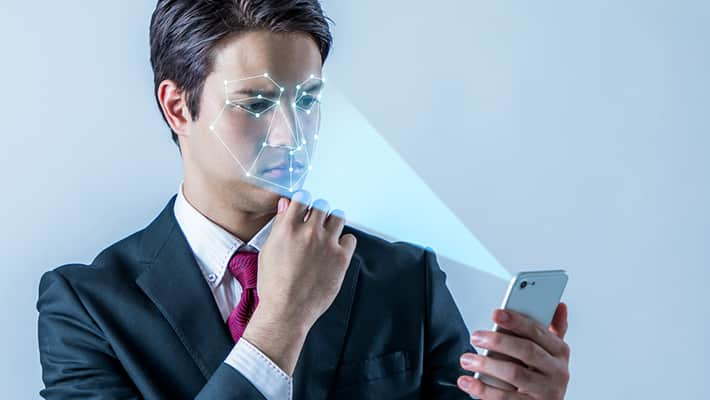
- Biometrics use physical or behavioral characteristics, such as fingerprints, facial features, and voice patterns, to verify identity. They are most effective when combined with other authentication methods.
- Biometric data can be stolen or misused through phishing, database breaches, and AI-powered impersonation. Unlike passwords, physical biometric traits cannot simply be changed after a breach.
- Deepfakes and injection attacks pose growing risks to biometric verification. According to iProov, injection attacks increased by 741% in 2025, highlighting the need for stronger identity checks.
- Passkeys offer a secure alternative to traditional passwords by combining cryptographic credentials with device-based authentication, often unlocked using biometrics or a PIN.
Biometrics are rising as an advanced layer to many personal and enterprise security systems. With the unique identifiers of your biology and behaviors, this may seem foolproof. However, biometric identity has made many cautious about its use as standalone authentication.
Modern cybersecurity is focused on reducing the risks for this powerful security solution: traditional passwords have long been a point of weakness for security systems. Biometrics aims to answer this issue by linking proof-of-identity to our bodies and behavior patterns.
In this article, we’ll explore the basics of how cybersecurity uses biometrics. To help break things down, we’ll answer some common biometrics questions:
- What is the meaning of biometric?
- What is biometric data?
- What is a biometric scanner?
- What are the risks of biometric security?
- How can we make biometrics more secure?
What is Biometrics?
For a quick biometrics definition: Biometrics are biological measurements — or physical characteristics — that can be used to identify individuals. For example, fingerprint mapping, facial recognition, and retina scans are all forms of biometric technology, but these are just the most recognized options.
Researchers claim the shape of an ear, the way someone sits and walks, unique body odors, the veins in one’s hands, and even facial contortions are other unique identifiers. These traits further define biometrics.
Three Types of Biometrics Security
While they can have other applications, biometrics have been often used in security, and you can mostly label biometrics into three groups:
- Biological biometrics
- Morphological biometrics
- Behavioral biometrics
Biological biometrics use traits at a genetic and molecular level. These may include features like DNA or your blood, which might be assessed through a sample of your body’s fluids.
Morphological biometrics involve the structure of your body. More physical traits like your eye, fingerprint, or the shape of your face can be mapped for use with security scanners.
Behavioral biometrics are based on patterns unique to each person. How you walk, speak, or even type on a keyboard can be an indication of your identity if these patterns are tracked.
Biometric Security Works
Biometric identification has a growing role in our everyday security. Physical characteristics are relatively fixed and individualized — even in the case of twins. Each person’s unique biometric identity can be used to replace or at least augment password systems for computers, phones, and restricted access rooms and buildings.
Once biometric data is obtained and mapped, it is then saved to be matched with future attempts at access. Most of the time, this data is encrypted and stored within the device or in a remote server.
Biometrics scanners are hardware used to capture the biometric for verification of identity. These scans match against the saved database to approve or deny access to the system.
In other words, biometric security means your body becomes the “key” to unlock your access.
Biometrics are largely used because of two major benefits:
- Convenience of use: Biometrics are always with you and cannot be lost or forgotten.
- Difficult to replicate: Biometric characteristics are generally harder to guess or reproduce than passwords. However, biometric data can still be stolen, and authentication systems can be tricked.
While these systems are not perfect, they offer tons of promise for the future of cybersecurity.
Examples of Biometric Security
Here are some common examples of biometric security:
- Voice Recognition
- Ingerprint Scanning
- Facial Recognition
- Iris Recognition
- Heart-Rate Sensors
In practice, biometric security has already seen effective use across many industries.
Biometric authentication is used in industries such as banking, healthcare, and transportation to verify identities and control access to sensitive information. Common applications include fingerprint and facial recognition for account access, identity verification, and access to restricted systems.
Biometrics are incorporated in e-Passports throughout the world. In the United States, e-passports have a chip that contains a digital photograph of one’s face, fingerprint, or iris, as well as technology that prevents the chip from being read — and the data skimmed — by unauthorized data readers.
As these security systems are rolled out, we are seeing the pros and cons play out in real-time.

Are Biometric Scanners Safe? - Improvements and Concerns
Biometric scanners have become a standard feature of modern smartphones. You can find biometric authentication in phone security systems, where fingerprint sensors and facial recognition allow users to unlock devices, authorize payments, and access protected applications. Many devices use dedicated security hardware to protect biometric information and reduce unauthorized access.
Modern facial recognition systems may use infrared cameras, depth sensing, and other technologies to distinguish a real person from a photograph. Some fingerprint scanners also incorporate additional security measures to detect artificial fingerprints. However, the effectiveness of these protections varies between devices and authentication systems.
Earlier security research demonstrated that biometric scanners, including facial recognition systems, could be tricked under certain conditions. Researchers at the University of North Carolina at Chapel Hill downloaded photos of 20 volunteers from social media and used them to construct 3-D models of their faces. The researchers successfully breached four of the five security systems they tested.
Examples of fingerprint cloning are everywhere. One example from the Black Hat cybersecurity conference demonstrated that a fingerprint can be cloned reliably in about 40 minutes with $10 worth of material, simply by making a fingerprint impression in molding plastic or candle wax.
Germany’s Chaos Computer Club spoofed the iPhone’s TouchID fingerprint reader within two days of its release. The group simply photographed a fingerprint on a glass surface and used it to unlock the iPhone 5s.
Biometrics - Identity & Privacy Concerns
Biometric authentication is convenient, but privacy advocates fear that biometric security erodes personal privacy. The concern is that personal data could be collected easily and without consent.
Facial recognition is a part of everyday life in Chinese cities, where it's used for routine purchases, and London is famously dotted with CCTV cameras. Now, New York, Chicago, and Moscow are linking CCTV cameras in their cities to facial recognition databases to help local police fight crime. Ramping up the technology, Carnegie Mellon University is developing a camera that can scan the irises of people in crowds from a distance of 10 meters.
In 2018, facial recognition was introduced in Dubai airport, where travelers are photographed by 80 cameras as they pass through a tunnel in a virtual aquarium.
Facial recognition cameras are also at work in other airports throughout the world, including those in Helsinki, Amsterdam, Minneapolis-St. Paul, and Tampa. All that data must be stored somewhere, fueling fears of constant surveillance and misuse of personal information.
Regulators have started to respond to these concerns. Since February 2025, Article 5 of the EU AI Act has prohibited the use of real-time remote biometric identification in publicly accessible spaces for law enforcement purposes, subject to limited exceptions and strict authorization requirements. Separately, under Article 9 of the EU's GDPR, biometric data processed to uniquely identify a person is classified as a special category of personal data. Its processing is generally prohibited unless a specific legal exception applies, such as explicit consent.
Biometric Data Security Concerns
A more immediate problem is that databases of personal information are targets for hackers. For example, when the U.S. Office of Personnel Management was hacked in 2015, cybercriminals made off with the fingerprints of 5.6 million government employees, leaving them vulnerable to identity theft.
Cybercriminals are increasingly targeting biometric information through phishing. According to Kaspersky's 2025 phishing research, fraudulent websites may request camera access under the pretext of identity verification to capture facial images or other sensitive information. Attackers can also use AI-generated deepfakes and voice cloning to impersonate victims and attempt to bypass identity checks. Unlike passwords, compromised biometric characteristics cannot simply be changed.
Storing biometric data on a device – like the iPhone’s TouchID or Face ID – is considered safer than storing it with a service provider, even when the data is encrypted.
That risk is similar to that of a password database, in which hackers may breach the system and steal data that’s not effectively secured. The ramifications, however, are significantly different. If a password is compromised, it can be changed. Biometric data, in contrast, remains the same forever.
Biometric spoofing has evolved beyond photographs and fingerprint molds. In an injection attack, criminals attempt to bypass a device's camera by feeding manipulated or AI-generated video directly into the identity verification system. According to iProov's 2026 Threat Intelligence Report, these attacks increased by 741% year over year in 2025, while attacks targeting iOS devices rose by 1,151% in the second half of the year. The Financial Action Task Force also warns that AI-generated deepfakes can undermine identity verification and fraud detection, highlighting the need for stronger security measures.
Ways to Protect Biometric Identity
With the risks to privacy and safety, additional protections must be used in biometric systems.
Unauthorized access becomes more difficult when systems require multiple means of authentication, such as life detection (like blinking) and matching encoded samples to users within encrypted domains.
Some security systems also include additional features, such as age, gender, and height, in biometric data to thwart hackers.
India's Unique ID Authority of India Aadhaar program is a good example. Initiated in 2009, the multi-step authentication program incorporates iris scans, fingerprints from all 10 fingers, and facial recognition.
This biometric information is linked to a unique 12-digit Aadhaar identification number. According to the Unique Identification Authority of India, more than 1.4 billion Aadhaar numbers have been issued. Aadhaar is widely used for identity verification, including access to government services and welfare programs, although its use is subject to specific legal requirements and exceptions.
Biometrics can serve as one authentication factor in a multi-factor authentication system. This approach combines two or more different types of authentication factors, such as:
- Something you are (biometrics)
- Something you have (like a hardware token) or something you know (like a password)
Two-factor authentication makes a powerful combination, especially as IoT devices proliferate. By layering the protection, secured internet devices become less vulnerable to data breaches. However, multi-factor authentication remains underused. According to a 2026 Kaspersky survey, only 46% of Windows users and 51% of macOS users reported enabling two-factor or multi-factor authentication. Combining biometrics with another authentication factor can help reduce the risk of unauthorized access.
Biometrics can also make passwordless authentication more convenient through passkeys. These credentials use public-key cryptography and allow users to sign in by unlocking a private key with a fingerprint, facial recognition, or device PIN. According to the FIDO Alliance's State of Passkeys 2026 report, approximately 5 billion passkeys are in use worldwide, with 75% of surveyed consumers having enabled a passkey on at least one account.
In addition, using a password manager — many of which now generate and unlock with passkeys as well as traditional passwords — to store any traditional passwords can give you an additional safeguard.
Independently tested and awarded by the industry's leading labs.



Takeaways on Biometrics
In summary, biometrics remains a growing way to verify identity for cybersecurity systems.
The combined protection of your physical or behavioral signatures with other authentications gives some of the strongest known security. At the moment, it is at a minimum better than using a character-based password as a standalone verification.
Biometric technology offers very compelling solutions for security. Despite the risks, the systems are convenient and hard to duplicate. Plus, these systems will continue to develop for a very long time into the future.
Related Articles:
- What is facial recognition and how is it used in security?
- What is passwordless authentication and how does it enhance security?
- What is internet security and how does it protect you online?
- Learn more about Multi-factor authentication
Recommended products:
FAQs
Can biometric data be stolen like a password?
Yes. Biometric data can be stolen through database breaches, phishing, or compromised systems. Unlike passwords, fingerprints and facial characteristics cannot be changed after a breach, making secure storage and additional authentication methods particularly important.
Is it safe to use fingerprint or face unlock on my phone?
Yes. Fingerprint and facial recognition are generally safe when biometric data is securely stored on your device. However, no authentication method is foolproof. Use a strong device PIN or password and keep your software updated.
What's the difference between a biometric scanner and a passkey?
A biometric scanner captures physical characteristics, such as fingerprints or facial features, to verify identity. A passkey is a cryptographic login credential that replaces traditional passwords and can be unlocked using biometrics or a device PIN.
Can someone unlock my device or accounts with a photo of my face?
Some basic facial recognition systems can be fooled by photographs. Modern systems use depth sensing and liveness detection to reduce this risk. However, advanced spoofing techniques and AI-generated deepfakes remain potential threats.