More than a half (56%) of internet users faced fraud over the past year, and 45% became victims of attacks on their devices, accounts or data, according to a new global survey* by Kaspersky. Scams are now more sophisticated than ever, and Kaspersky’s AI- and ML-powered technologies help users stay protected against fraudulent schemes. For greater confidence and clarity, these capabilities are now grouped into a dedicated block inside Windows and macOS apps.
The scam landscape continues to evolve rapidly, becoming more sophisticated and targeted, and attacks are increasingly powered by AI. Users can face potential threats in almost any type of online interaction: emails, messengers, social media, online shops or apps.
In Q1 2026 only, Kaspersky anti-phishing technologies blocked over 140M phishing and scam attempts, underscoring how pervasive this web threat has become.
According to the latest survey* from Kaspersky’s market research center, more than a half of respondents said they had faced online scams or fraud over the past year, while 45% reported becoming victims of attacks on their devices, accounts or data (social media accounts hacking, data leakage, malware infection etc.).
Kaspersky experts highlight, that scams are becoming more widespread, as almost every emerging trend or global event quickly becomes a foothold for fraudsters. In March 2026, Kaspersky’s anti-phishing technologies detected rising scam activity around the 2026 World Cup, uncovering fraudulent resources that mimicked official tournament websites or exploited the event to lure users into unsafe interactions. The same underlying approach, combining machine learning, pattern recognition and real-time threat analysis, also helps Kaspersky technologies detect a broader range of scam scenarios, from classic phishing pages to fake shops, crypto scams and other schemes that may lead to financial loss.
Scam campaigns now may be even fueled by personal data stolen from breaches, infostealer malware, compromised accounts and other online exposures. Fraudsters combine this information to craft targeted messages, impersonate trusted contacts or make their scams more convincing. Kaspersky Premium protects customers from various digital threats, reducing these risks across all devices, including smartphones, with protection technologies tailored to each platform and reinforced by AI- and ML-based detection. These include Data Leak and Identity Theft checkers that warn users about potential exposure of personal information, Kaspersky Password Manager that helps keep credentials secure and unique, and behavior-based protection technologies such as System Watcher, which uses advanced app behavior monitoring and pattern recognition to detect signs of misuse or malicious activity in real time.
In Kaspersky apps for Windows and macOS, these capabilities are now brought together in a dedicated AI-powered Scam Protection block, making them easier for users to find and understand, while in mobile apps they continue to work in the background.
“AI-powered scams are a new reality. AI-generated, constantly increasing in volume and lurking everywhere, from fake ticket sites to impersonating friends on messengers, they can trick even the most experienced user. Relying on your own ability to spot a scam is not enough. That's why we've integrated advanced AI detection directly into our products – so our technology can spot what the human eye can't, and protect users in real time,” comments Marina Titova, Vice President for Consumer Business at Kaspersky.
New AI-labels mark the group of features that provides comprehensive protection from various web threats, allowing Windows and macOS users to find out how the solution secures every aspect of their digital interactions.
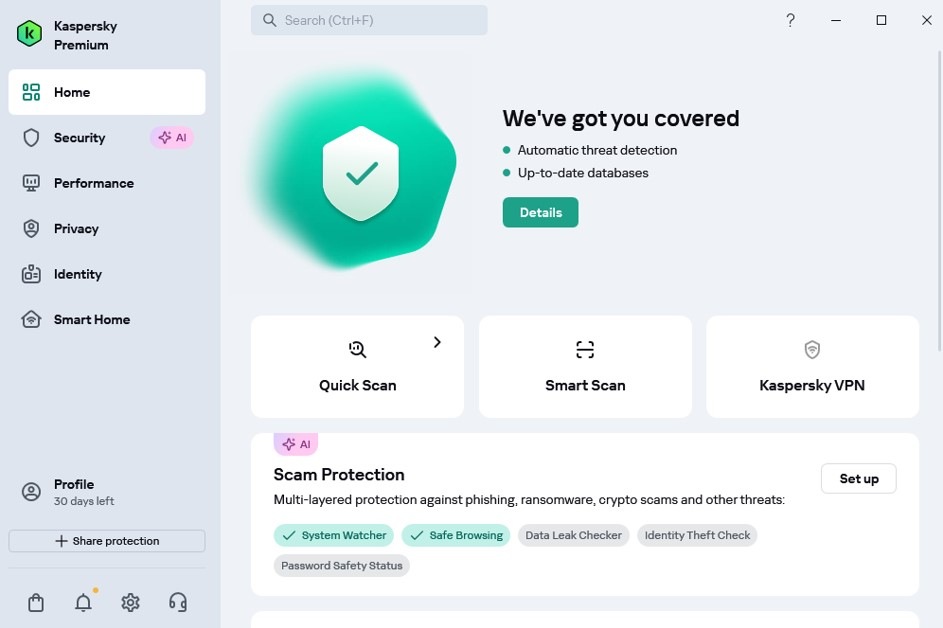
Updated design in Kaspersky for Windows
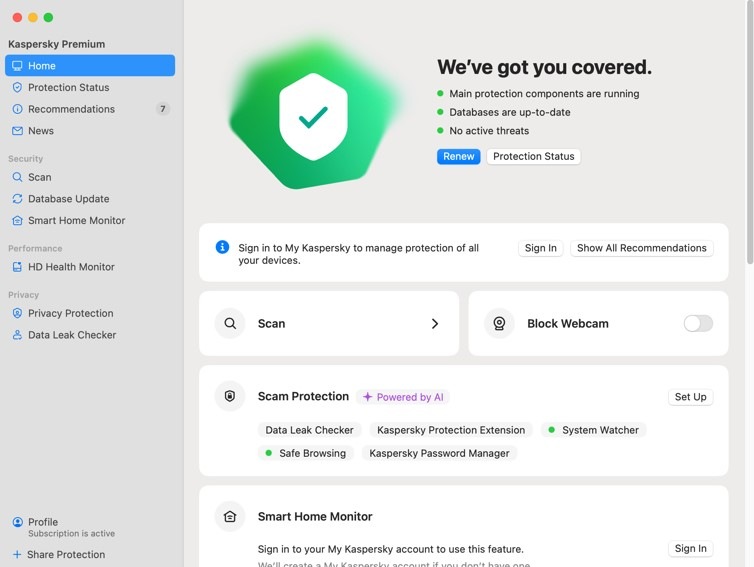
Updated design in Kaspersky for macOS
Download updated Kaspersky Premium for Windows and macOS via the link.
*The study was conducted by Kaspersky’s market research center in March 2026. 7200 respondents from 18 countries (Brazil, China, Colombia, Egypt, France, Germany, India, Indonesia, Italy, Malaysia, Mexico, Russia, Saudi Arabia, Spain, South Africa, Thailand, Turkey, Vietnam) took part in the survey.


