 vulnerabilities
Imagine you’ve been invited to a private poker game with famous athletes. Who would you trust more to shuffle the deck — a dealer or a specialized automated device? Fundamentally, this question boils down to what you’ve more faith in: the dealer’s honesty or the machine’s reliability. Many poker players would likely prefer the specialized device — it’s clearly harder to bribe or coerce than a human dealer. However, back in 2023, cybersecurity researchers demonstrated that one of the most popular shuffler models — the DeckMate 2 made by Light & Wonder — is actually quite easy to hack.
Two years later, law enforcement found traces of these devices being rigged not in a lab, but out in the wild. This post details how the DeckMate 2 shuffler works, why its design facilitates cheating, how criminals weaponized this hack, and what… basketball has to do with it all.
How the DeckMate 2 automated card shuffler works
The DeckMate 2 automatic shuffler went into production in 2012. Since then, it’s become one of the most popular models, used in nearly every major casino and private poker club in the world. The device is essentially a black box roughly the size of an average office shredder, and typically installed underneath the poker table.
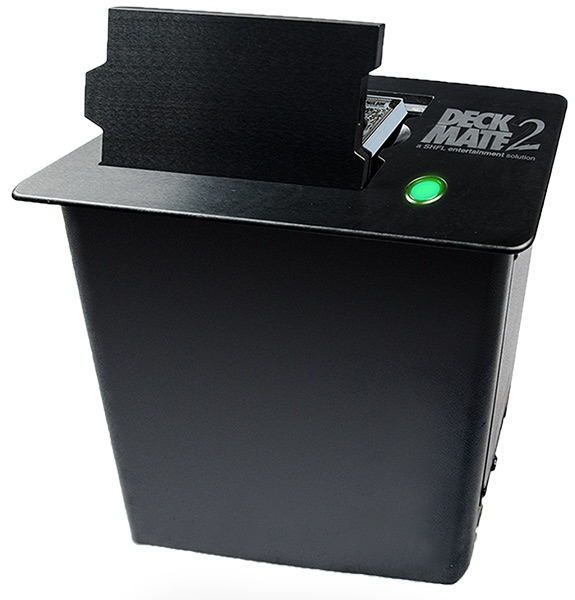
The DeckMate 2 is a professional automated card shuffler that quickly shuffles the deck while simultaneously verifying that all 52 cards are present and no extras have been slipped in. Source
On the table surface, only a small compartment is visible where the cards are placed for shuffling. Most ordinary players probably don’t realize that the “underwater” portion of this “iceberg” is significantly larger and more complex than it appears at first glance.
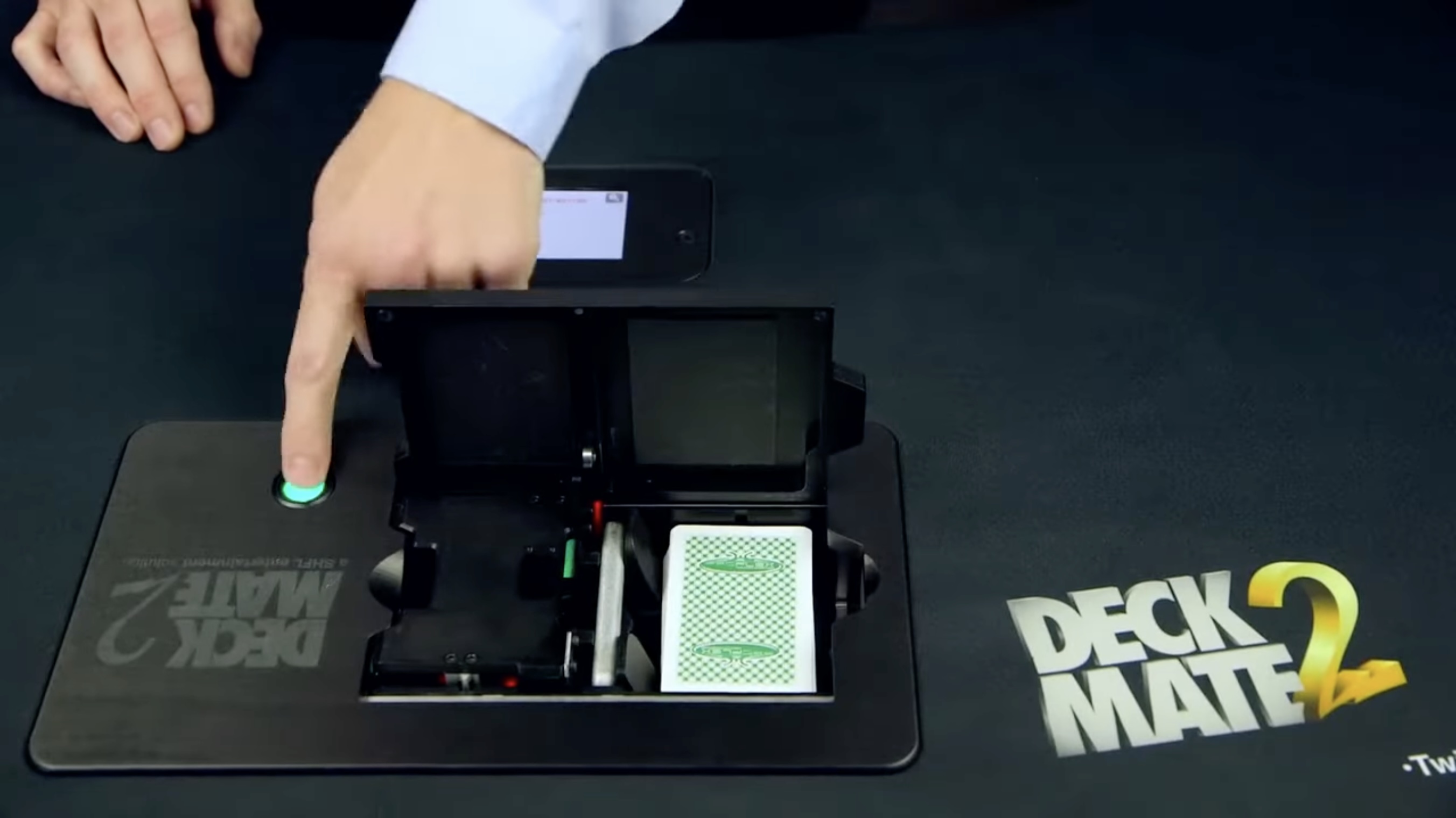
This is what the DeckMate 2 looks like when installed in a gaming table: all the fun stuff is hidden beneath the surface. Source
After the dealer places the deck inside the DeckMate 2, the machine runs the cards through a reading module one by one. At this stage, the device verifies that the deck contains all 52 cards and nothing except them — if that’s not the case the connected screen displays an alert. Afterward, the machine shuffles the cards and returns the deck to the dealer.
The DeckMate 2 takes just 22 seconds to both shuffle a deck and check the cards while it’s at it. The check for missing or extra cards uses an internal camera that scans every card in the deck — and this camera is also involved in sorting the deck. It’s hard to imagine the practical use for that last feature in card games — one might assume the designers added it just because they could.
Jumping ahead, this camera is what literally allowed both researchers and malicious actors to see the sequence of the cards. The previous model, the Deck Mate, didn’t have such a camera, and thus offered no way to peek at the card order.
To keep hackers out, the DeckMate 2 uses a hash check designed to confirm that the software hasn’t been altered after installation. Upon startup, the device calculates the hash of its firmware and compares it to the reference stored in its memory. If the values match, the machine assumes its firmware is unmodified and proceeds; if not, the device should recognize a tampering attempt.
Additionally, the DeckMate 2 design includes a USB port, which is used for loading firmware updates. DeckMate 2 devices can also be rented from the manufacturer Light & Wonder rather than purchased outright, often under a pay-per-use plan. In this case, they’re usually equipped with a cellular modem that transmits usage data to the manufacturer for billing.
How the researchers managed to compromise the DeckMate 2
Long-time readers of our blog have likely already spotted several flaws in the DeckMate 2 design that the researchers exploited for their proof-of-concept. They demonstrated it at the Black Hat cybersecurity conference in 2023.
The first step in the attack involved connecting a small device to the USB port. For their POC, the researchers used a Raspberry Pi microcomputer, which is smaller than an adult’s palm. However, they noted that with sufficient resources, malicious actors could execute the same attack using an even more compact module — the size of a standard USB flash drive.
Once connected, the device discreetly altered the DeckMate 2’s code and seized control. This also granted the researchers access to the aforementioned internal camera intended for verifying the deck. They could now view the exact order of the cards in the deck in real time.
This information was then transmitted via Bluetooth to a nearby phone, where an experimental app displayed the sequence of cards.
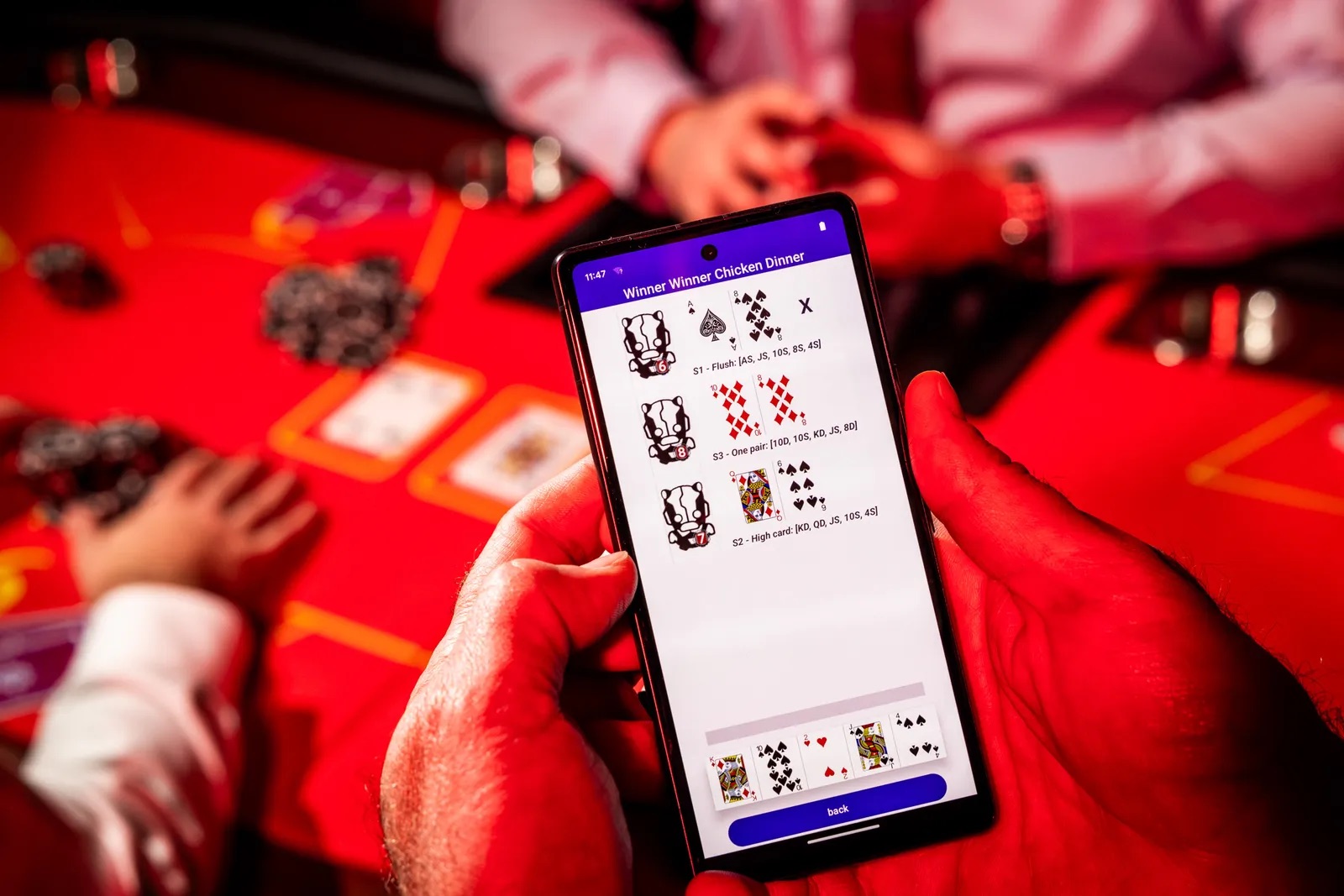
The experimental app created by the researchers: it receives the card order via Bluetooth from the hacked DeckMate 2. Source
The exploit relies on the cheater’s accomplice wielding the phone with the app installed on it. This person can then use subtle gestures/signals to the cheating player.
What enabled the researchers to gain this degree of control over the DeckMate 2 was a vulnerability in its hard-coded passwords. For their experiments, they purchased several second-hand shufflers, and one of the sellers provided them with the service password intended for DeckMate 2 maintenance. The researchers extracted the remaining passwords — including the root password — from the device’s firmware.
These system passwords on the DeckMate 2 are set by the manufacturer, and are highly likely to be identical for all devices. While studying the firmware code, the researchers discovered that the passwords were hard-coded into the system, making them difficult to change. As a result, the same set of passwords —known to a fairly wide circle of people — likely protects the majority of machines in circulation. This means that nearly all of the devices could be vulnerable to the attack developed by the researchers.
To bypass the hash check, the researchers simply overwrote the reference hash stored in memory. Upon startup, the device would compute the hash of the altered code, compare it to the now equally altered reference value, and deem the firmware authentic.
The researchers also noted that models equipped with cellular modems could potentially be hacked remotely — via a fake base station that the device would connect to instead of a real cell tower. While they didn’t test the viability of this attack vector, it doesn’t seem implausible.
How the mafia used rigged DeckMate 2 machines in real poker games
Two years later, the researchers’ warnings received a real-world confirmation. In October 2025, the U.S. Department of Justice indicted 31 people for organizing a series of fraudulent poker games. According to the case documents, in these games, a criminal group used various technical means to obtain information about their opponents’ hands.
These means included cards with invisible markings paired with phones, special glasses, and contact lenses capable of covertly reading these marks. But more importantly for the context of this post, the scammers also used hacked DeckMate 2 machines configured to secretly transmit information about which cards would end up in each player’s hand.
And this is where we finally get to the part about basketball and NBA athletes. According to the indictment, the scheme involved members of several mafia families, as well as former NBA players.
According to the investigation, the scammers set up a series of high-stakes poker games over several years in various U.S. cities. Wealthy victims were lured by the opportunity to play at the same table as NBA stars (who deny any wrongdoing). Investigators estimate that the victims lost a total of over $7 million.
Disclosed documents contain a truly cinematic account of how the scammers used the hacked DeckMate 2 machines. Instead of rigging other people’s DeckMate 2 devices via a USB port, as the researchers demonstrated, the criminals used pre-hacked shufflers. One episode even details mafia members taking a compromised device from its owner at gunpoint.
Despite this… peculiar modification to the first step of the attack, the core essence remained largely the same as the researchers’ POC. The hacked DeckMate 2 machines transmitted information to a remote operator, who in turn sent it to a participant’s phone. The criminals referred to this operator as the “quarterback”. The scammer would then use subtle signals to direct the course of the game.
What lessons we can learn from this tale
In their comments to journalists, the manufacturers of DeckMate 2 stated that following the research into the device’s hackability, they implemented several changes to both the hardware and software. These improvements included disabling the exposed USB port, and updating the firmware verification routines. Surely, licensed casinos have installed these updates. Well, let’s just hope they have.
However, the state of such devices used in private poker clubs and illegal casinos remains highly questionable. These places often employ second-hand DeckMate 2 machines without updates or proper maintenance, making them particularly vulnerable. And that’s not even considering cases where the house itself might have a motive to rig the machines.
Despite all the intriguing details of the DeckMate 2 hack, it’s based on fairly typical precursors: reused passwords, a USB port, and, of course, unlicensed gambling venues. In this regard, the only advice for gambling enthusiasts is to stay away from illegal gaming clubs.
The broader takeaway from this story is that pre-set system passwords should be changed on any device — whether it’s a Wi-Fi router or a card shuffler. To generate a strong, unique password and remember it, use a reliable password manager. By the way, you can also use Kaspersky Password Manager to generate one-time codes for two-factor authentication.
 Tips
Tips